Wednesday, May 25, 2016
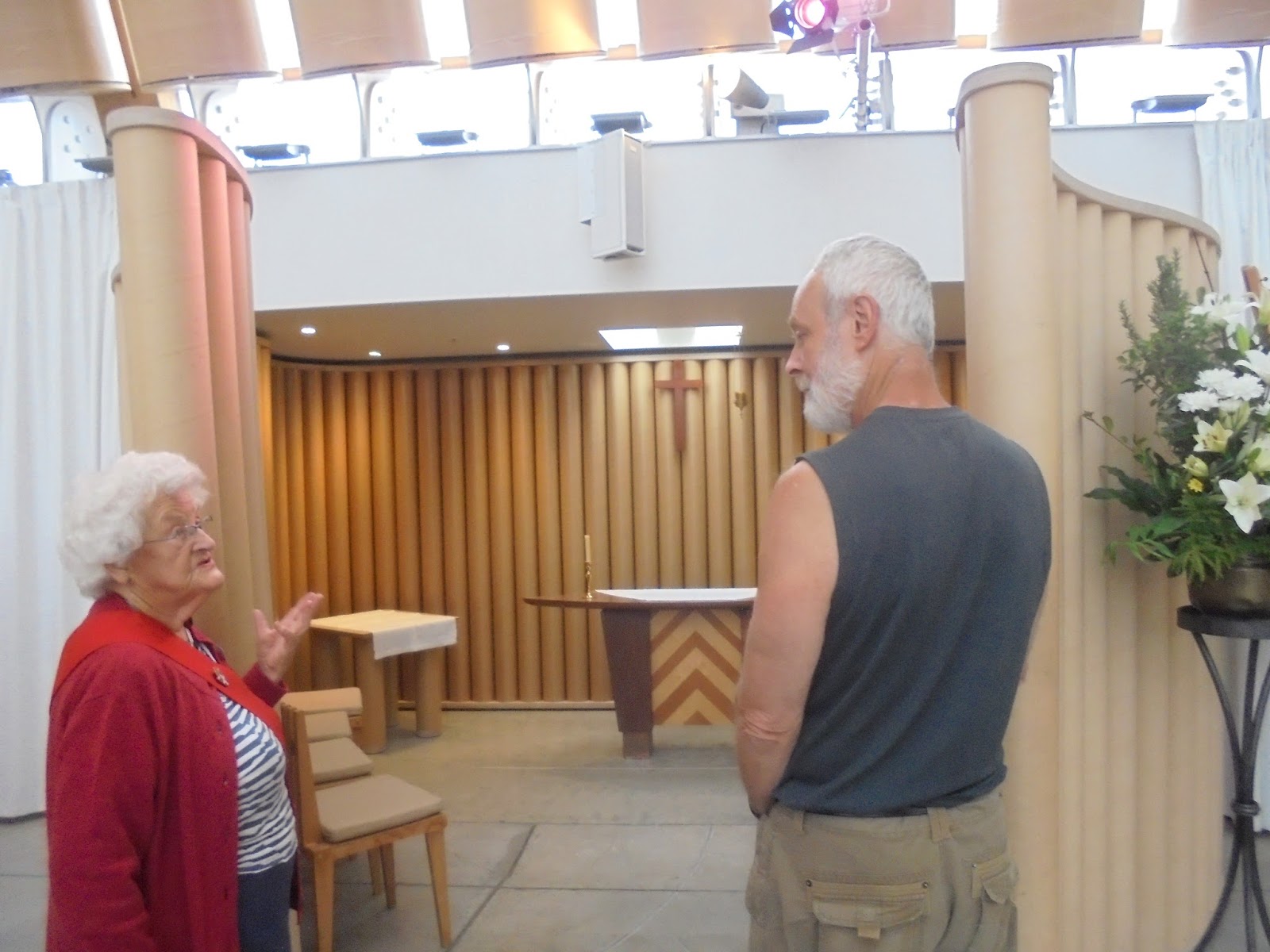
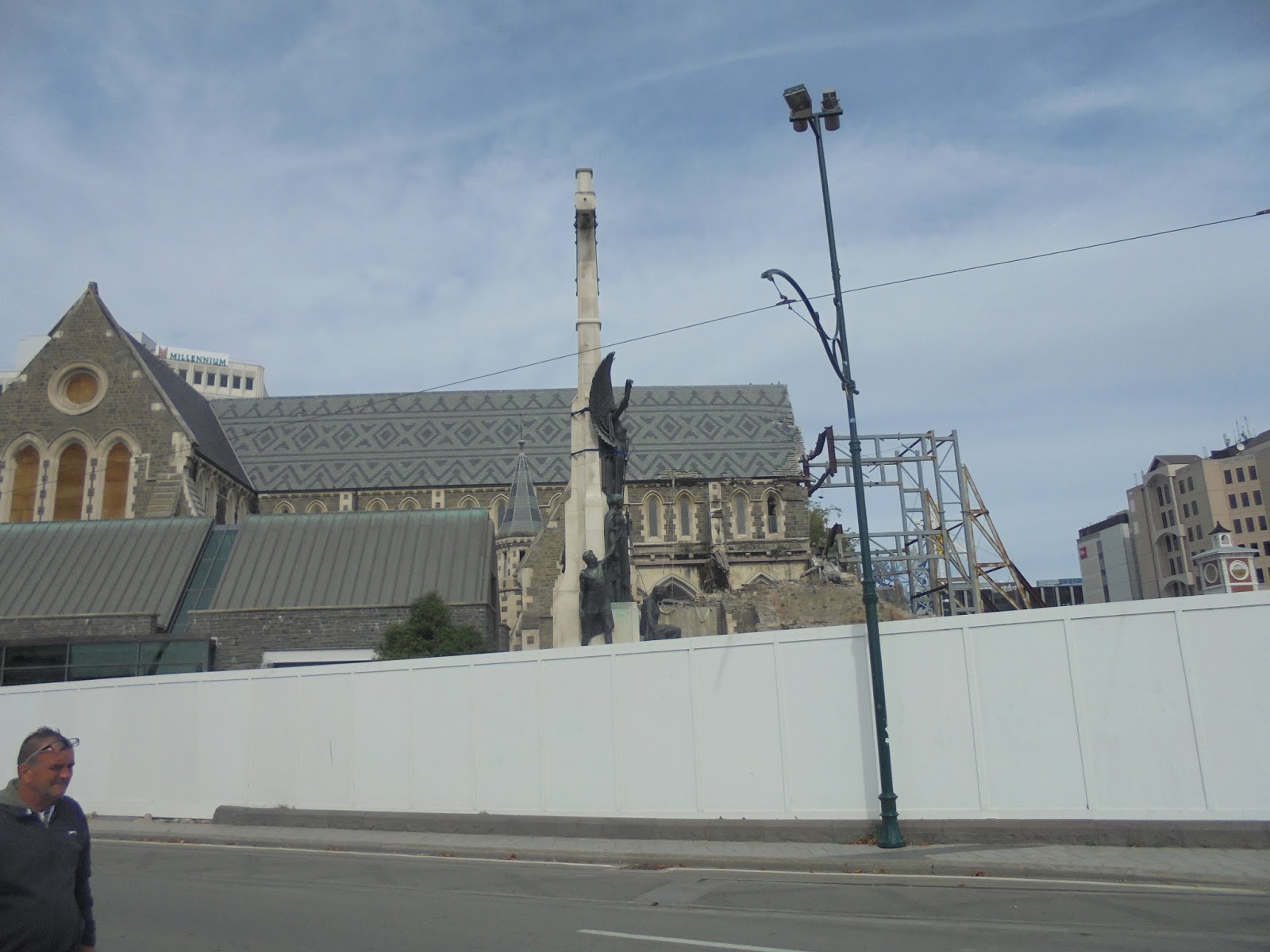
New Zealand, Part III: Christchurch Rising
Monday, May 16, 2016
A Kangaroo Tale
The photos below are ones that Kevin sent to family members. He encountered a kangaroo skeleton in the parking lot of the clinic at the abandoned military base, featured in the previous post. Believing that the kangaroo did not get hit by a car in the parking lot, he asked family members to speculate on how the kangaroo came to die there. Keara's response was so clever, and contains such deep, symbolic content, that I had to publish it.
WARNING: THIS POST IS RATED PG (parental guidance advised)!
Hi Uncle Kevin,
Jack’s wife, Agna, stayed. Jack was repeatedly reminded how lucky he was that his woman didn’t leave him over a little dry spell, but he wasn’t so sure. Lately they had been fighting over petty things. Cars, mostly. Her bitching reverberated in his brain constantly. “Do you have to drive that ridiculous piece of crap around town? It looks like a rotting banana.” And, “When will I get a new car? That thing’s so rusty, I’m liable to get tetanus just looking at it!” But of the many things about Agna that perplexed him, the fact that they didn’t even share a bed and she was the sole patron of the clinic perplexed Jack the most.
But not everyone was so community-oriented. Bragging loudly at the table behind him was the town’s local landscaper, Walter. Jack couldn’t even believe such a wasteful industry thrived in crisis times like these. Walter was nearly foaming at the mouth describing the incredible amount of water his company used. To drown out the noise, Jack muttered, “Walter the Water Wasting Wanker” to himself until he noticed a few weird looks from the bar regulars. He stumbled to his car and began the miserable drive home.
![]() |
| (Don't worry. This particular kangaroo was alive and resting. But we needed an illustration.) |
Dusty woke up in the scorching sun next to his roadkill lover the next morning. After weeping all night, his mouth was as dry as the outback. His tongue was, well, dusty. He couldn’t stand the pun he just made up in his own head, or looking at his scarlet Scarlett any more. He began hopping deliriously down the A376.
Then Dusty noticed another billboard. With an extremely familiar tag line and a giant yellow arrow that said, “We test wee.” Dusty followed that arrow. Because he decided that the last thing he would ever drink was the red hot blood of the bastard that turned his Scarlett scarlet. He could already taste the sweet, salty revenge.
We could go into detail about what happens between Agna and Jack, but that’s not important. The important thing is that there would be no revenge or redemption at Dusty’s final destination. Dusty would spend his final moments shaking his fist at the sky. Or rather, at Agna’s rusted undercarriage. Life teaches you lessons, and Dusty learned the hard way that life’s not fair.
Emus, Roos, and the Strangest Best Western Ever
When we first planned the Australian leg of our trip, we expected to go to the Great Barrier Reef. But we discovered we would be traveling when that area typically experiences heavy storms. It's also a time when the nearby coast is often infested with Australian Box Jellyfish—and their venom is so toxic, it can kill you in minutes. Since we couldn't visit the reef except by boat and the weather might not cooperate, we decided to go to the Ningaloo Reef in Western Australia instead. That's how we arrived at the Strangest Best Western Ever.
| Emus stroll the grounds of the Sea Breeze. |
| The landscape around Exmouth is a little barren. |
| Traffic stops for the emus. |
| Don't yell "Shark!" when I'm in the water, please! |
Note: I don't have a photo of it, but Kevin enjoyed a brief run with a kangaroo pacing him at Exmouth. It will probably be his only chance to run with a kangaroo. |
Tuesday, May 10, 2016
Perth, Our Welcome to Western Australia
Perth was founded in 1829, primarily because the British were afraid that France would set up a colony in Western Australia, which explains its relative isolation from other major population centers. But while I was there, the image of the map of Australia--and its place in the world--was firmly in my mind. It felt remote to me. "Here we are down at the bottom of the world," I thought, as though top and bottom make any sense on a globe, but then that's how we conventionally think about it, isn't it?
We enjoyed a few nights' stay at an Airbnb apartment in Perth, and although we usually choose to have an entire house or apartment to ourselves, in Perth we chose to stay with a host. We had our own private bathroom and access to the rest of the apartment, where we were able to relax. The owner, Anna, who works at the University of Western Australia, welcomed us in spite of an injury that had laid her up. The views from her balcony were spectacular!
One night, we even saw fireworks across the Swan River. The river, which we overlooked, eventually opens up to the Indian Ocean at Freemantle. Anna kindly gave us a ride to Freemantle when she was feeling better, and we enjoyed exploring the port town.
While relaxing in Freemantle, we met Erika Roper, a researcher who studies black cockatoos. (There are three species in Western Australia, and I have forgotten which species she studies.) However, it was a great pleasure to meet someone who has devoted her life to this research and who cares so much about these beautiful, threatened birds.
| Kevin with Erika Roper. |
I had wanted to visit Rottenest Island, which is off the coast of Freemantle, but sadly, we had to forego that trip. When you are traveling long-term, you have to weigh every excursion and sight, because if you do everything you'd like to do, you'd quickly run out of money--and we had months to go!
Rottenest Island got its name from sailors who mistook the quokkas, the small marsupials that overrun the island, for rats. Quokkas are adorable, and I wanted to see them on the island, where they are known to be relatively tame. However, the roundtrip ferry ride to Rottenest was expensive, and there isn't a lot to do there, except swim, snorkel, and bicycle. Since Kevin doesn't like to swim and won't snorkel, and my knee won't let me cycle, we decided to spend about $12 and see quokkas in the Perth Zoo instead.
![]() |
| Quokkas are cute! (Image from Dreamtime.com) |
I have mixed feelings about zoos. I recognize that zoos do valuable work in saving some endangered species. But I think that the animals should have adequate space and consideration and large, social mammals like whales and elephants do not belong in zoos or aquariums. So I was saddened to see that the Perth Zoo still has an elephant.
| The zoo grows eucalyptus just for the koalas. |
We saw the koalas in the zoo. While there are places in Australia that actually let you hold koalas, the experts frown on that, because humans can pass diseases to koalas. So we were content just to see them. There was no option to hold them at the zoo, anyway.
The kangaroos and wallabies at the zoo seemed to have a lot of freedom and a fairly spacious area.
While we were there, one mother tried to hurry her dawdling children along: "Come along now. We can see kangaroos at Nanas."
I smiled. The only kangaroos I ever saw at my nana's house were ceramic ones.
Because the animals have free-run of the enclosure, signs ask you to be careful when leaving. We were careful and although I would have liked to bring one home, I realized that was hardly practical!
We were shown around the zoo by John, a local resident and docent who is 80 years old. He so obviously loves the animals and his volunteer job. We were lucky to have a private tour, because no one else showed up on time at the tour point. He was a delightful guide, and he told us he has flocks of parrots and cockatoos in his back garden every morning.
Saturday, May 7, 2016
Katoomba and The Three Sisters
Leaving the Kangaroo Valley on our way to Katoomba, we stopped at Fitzroy Falls. My photos don't do justice to this lovely landmark, with its jaw-dropping views from the top.
Because we were heading to the Blue Mountains and the Three Sisters rock formation, at a higher elevation, we expected we were going to a remote area. But we found both going out and on our return to Sydney that suburbs meld into small towns all the way there. However, once you get to Katoomba and the viewpoint to the Three Sisters, the landscape is breathtaking. We hiked along the rim of the canyon and down to the Three Sisters to take in the view.
We clambered down to an overlook, even though I am afraid of heights. Along the way, many of the rocks were so colorful they looked as though they had been painted.
Katoomba is also the home of the Waradah Aboriginal Centre, which is run by the local Dharug and Gundungurra tribes. It features performances, exhibits, and an art gallery.
| The canvas in the front depicts the Australian Aboriginal flag, one of the official flags of Australia. |
| The toilets at the visitor center show how to use them. |
Should you go to Katoomba, don't make the mistake that one visitor did. She asked the information desk, "Where are the Blue Mountains?" She was expecting the mountains to literally be blue. But Australia's Blue Mountains, like our own forested lands in the Pacific Northwest, only appear blue in the distance, because of how different wavelengths of light scatter in the atmosphere.
We only spent a couple nights at Katoomba. While there, we explored some forest trails and walked along a peaceful lake. Soon, we were headed back to Sydney.